Neuromotor Rehabilitation After Injury: Returning to Sport Safely
After an injury, returning to sport is not limited to tissue healing. Neuromotor rehabilitation restores coordination, proprioception and cognitive functions altered by immobilization. Discover structured protocols to return to sport safely.
Why neuromotor rehabilitation is essential after injury
An injury doesn't just damage tissue: it disrupts the brain's motor program. Immobilization, pain and limping alter muscle recruitment patterns, degrade proprioception and reduce cognitive processing speed. Returning to sport without retraining these dimensions exposes you to recurrence and chronic compensation.
Neuromotor rehabilitation targets precisely these dimensions: it reconnects the brain to the injured body to restore fluid, safe and performant execution.
The 3 pillars of neuromotor rehabilitation
1. Proprioception restoration
After a sprain or immobilization, the sense of joint position is degraded. The brain no longer knows exactly where the joint is in space.
Practical protocol: Single-leg balance exercises, unstable surfaces, eyes closed. Progression from static to dynamic, then to sport-specific.
2. Motor pattern relearning
Pain has installed compensations (limping, asymmetric loading). These erroneous patterns must be deconstructed and correct movement rebuilt.
Practical protocol: Slow analytical exercises with visual feedback (mirror, video), then gradual integration into the full sporting gesture.
3. Cognitive and attentional rehabilitation
Immobilization reduces sensorimotor stimulation. Reaction speed, divided attention and anticipation are impacted. Yet returning to sport requires these cognitive functions at full intensity.
Practical protocol: Cognitive reactivity, inhibition and dual-task exercises integrated with physical exercises to restore the cognition-movement coordination.
The Mindtrain app in the service of rehabilitation
Mindtrain offers a suite of cognitive and motor exercises directly usable in the rehabilitation phase. Here's how each exercise fits into a return-to-sport protocol.
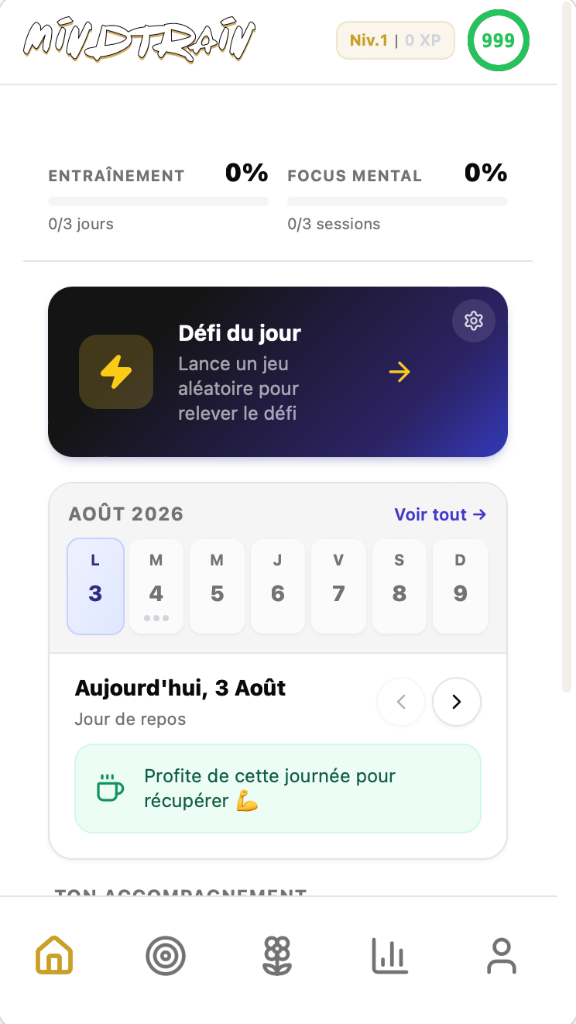
The Mindtrain dashboard: daily challenge, training calendar and personalized guidance.
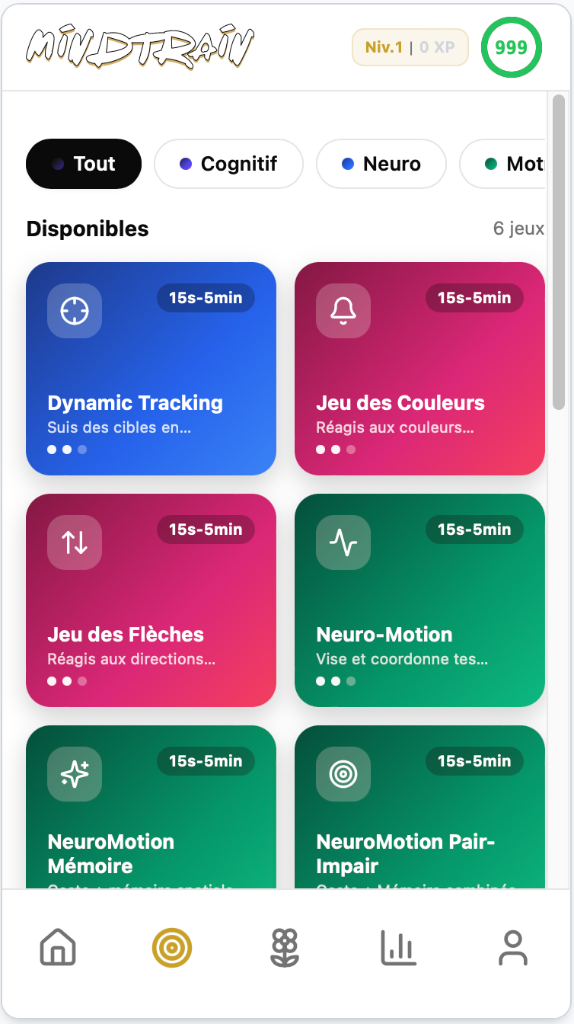
Catalog of 6 cognitive games: Dynamic Tracking, Colors, Arrows, Neuro-Motion, Memory and Odd/Even.
Exercises for rehabilitation
Color Game — Visual reactivity
Visual reactivity is the first function to restore after immobilization. The Color Game (Jeu des Couleurs) trains reaction speed to a colored signal, with three progressive game surfaces.
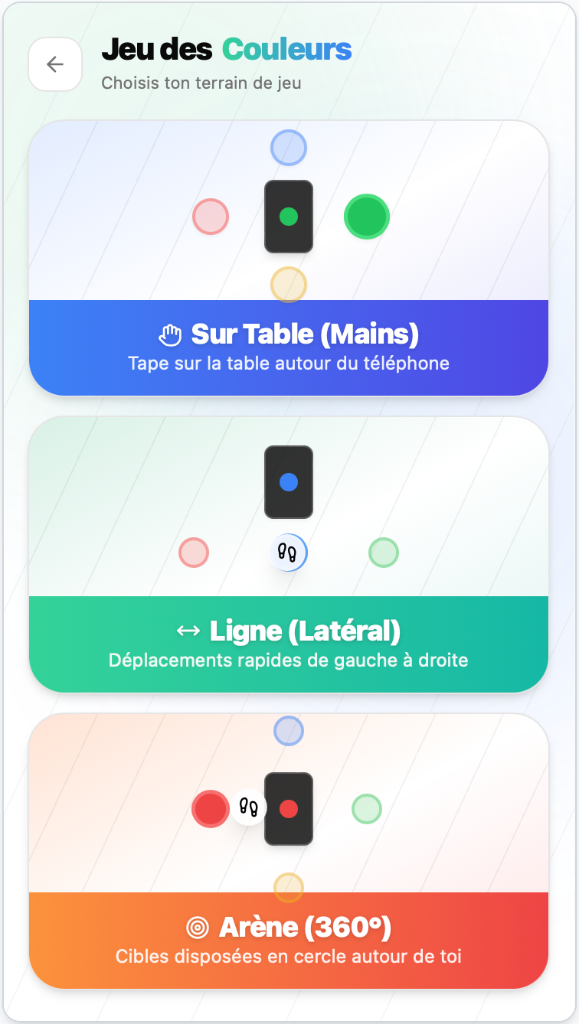
Surface selection: Table (hands), Line (lateral) or Arena (360°) — from static to multidirectional.
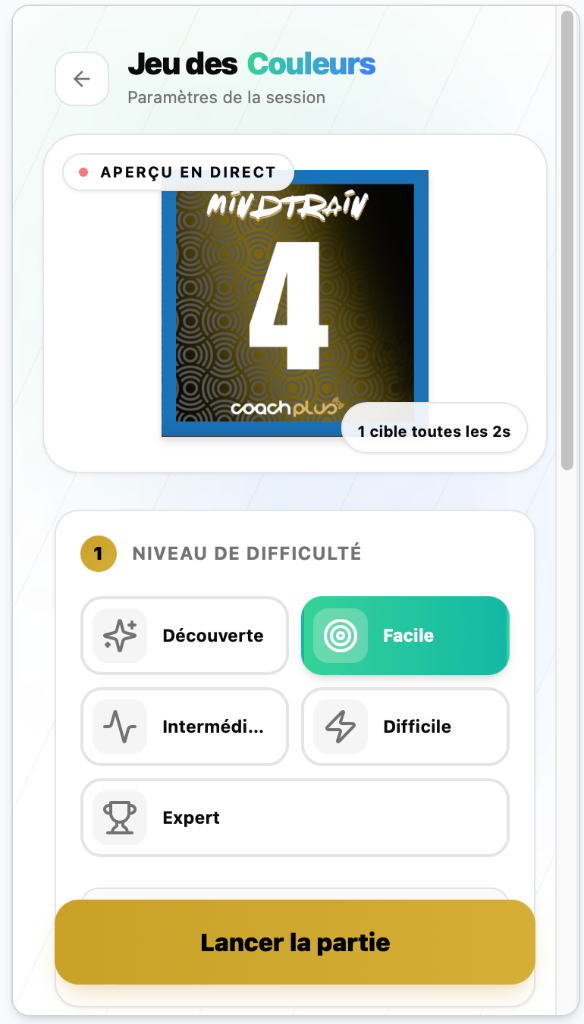
Live preview and difficulty selection — the athlete progresses at their own pace.
Arrow Game — Directional reactivity
The Arrow Game (Jeu des Flèches) trains reaction to a direction. It's particularly relevant for restoring visuomotor coordination after a lower-limb injury.
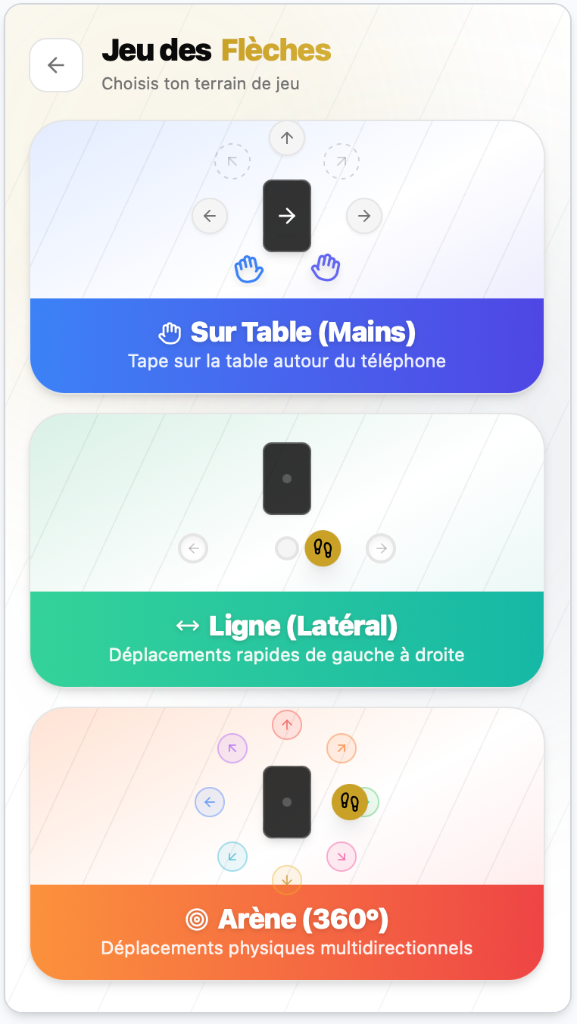
Surface selection: quick side-to-side or multidirectional movements.
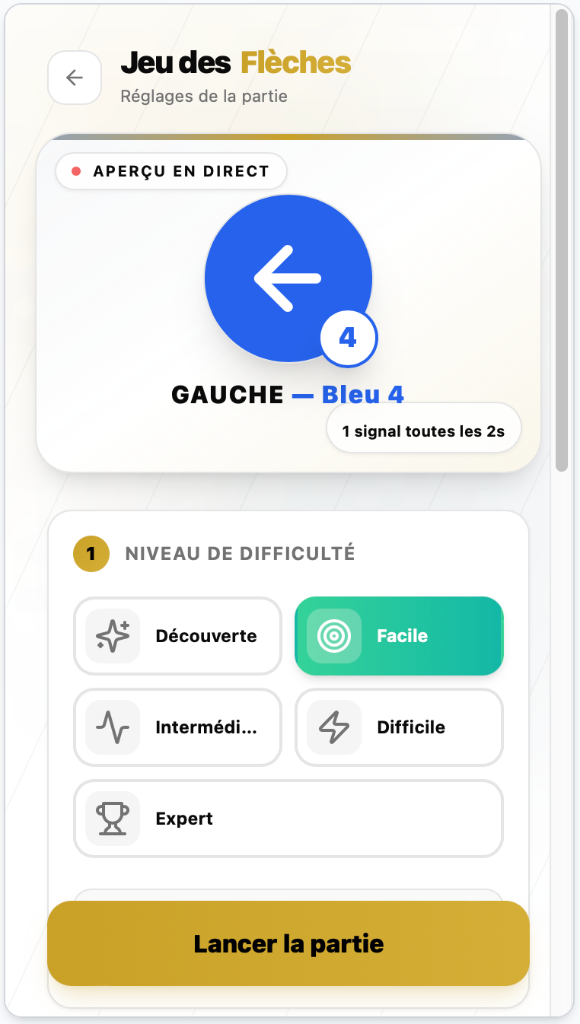
Live preview and difficulty selection — gradual progression for return to sport.
Neuro Motion — Coordination and targeting
Neuro Motion trains eye-hand and eye-foot coordination. It's the key exercise for restoring gesture precision after a joint injury.
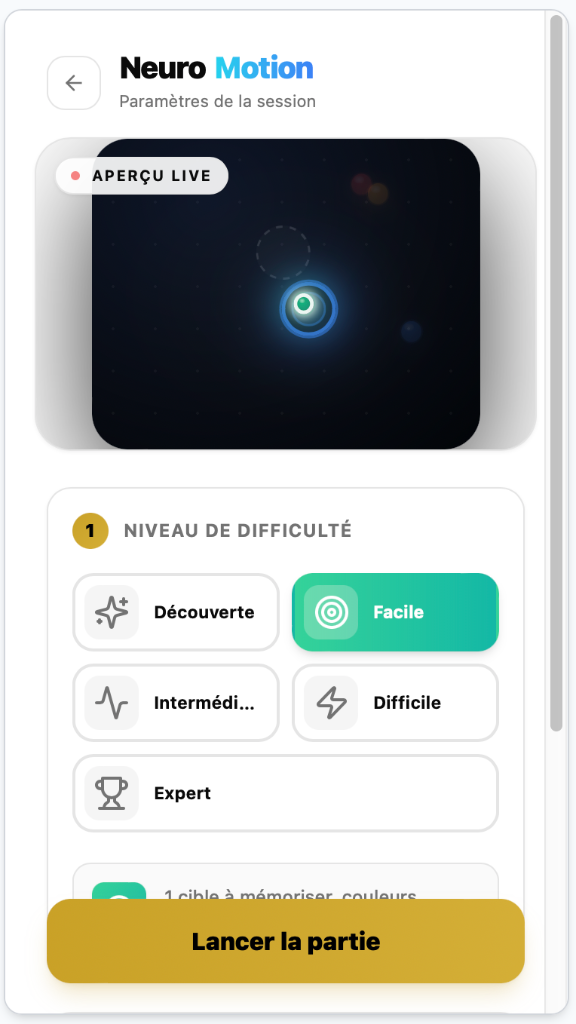
Live preview and difficulty selection — progress from wide target to precise target.
NeuroMotion Odd/Even — Divided attention
NeuroMotion Odd/Even (Pair/Impair) combines memorization, counting and motor restitution. It restores divided attention, often degraded after a period of inactivity.
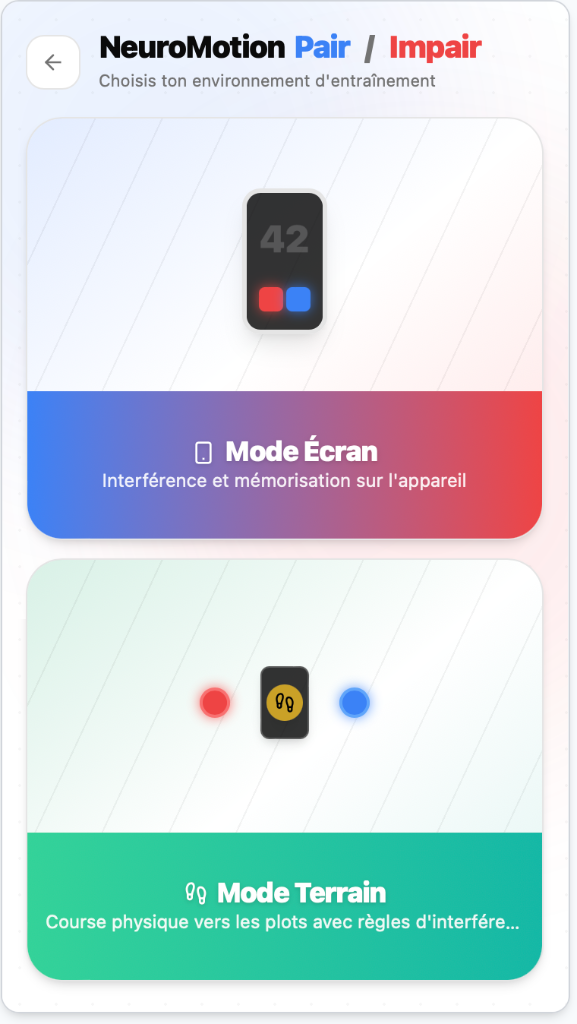
Mode selection: Screen (interference and memorization) or Field (physical running to cones).
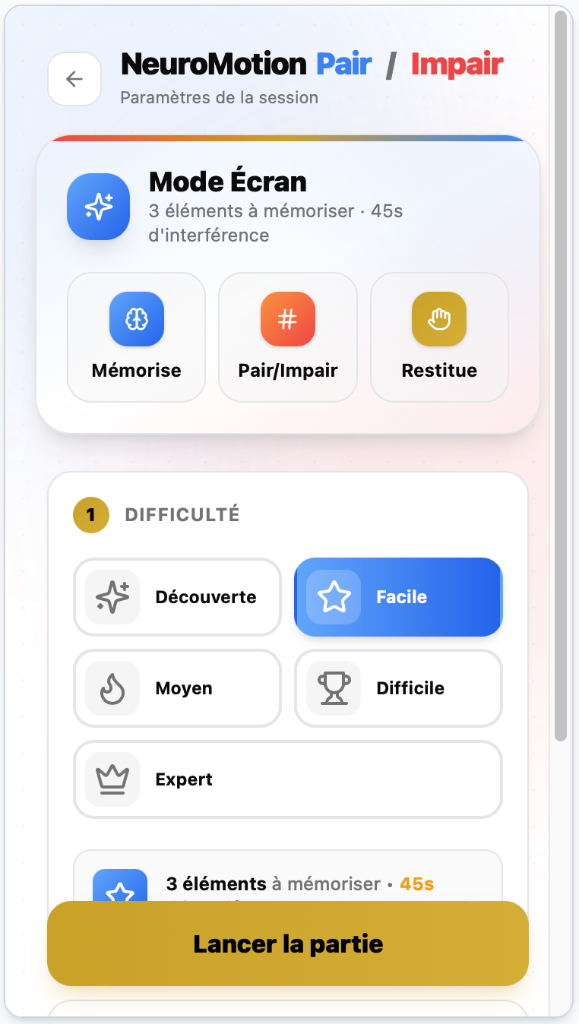
Memorize, count Odd/Even, then recall — the cognitive-motor dual task in 3 phases.
Breathing — Regulation and recovery
Breathing is a recovery lever after effort. Cardiac coherence stimulates the parasympathetic system and accelerates the return to calm.
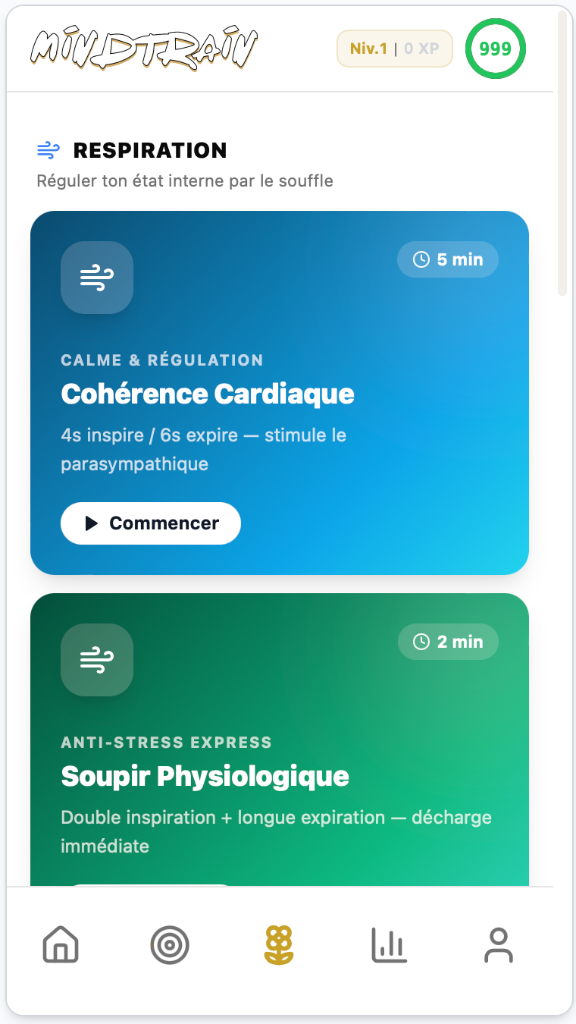
Cardiac coherence (5 min) and physiological sigh (2 min) — for post-rehabilitation recovery.
Mindtrain physical equipment
Beyond the app, Mindtrain relies on physical equipment designed to maximize cognitive training through movement.
The motor skills mat
The Mindtrain mat is an exclusive training support that combines with colored targets for reactivity and coordination exercises.
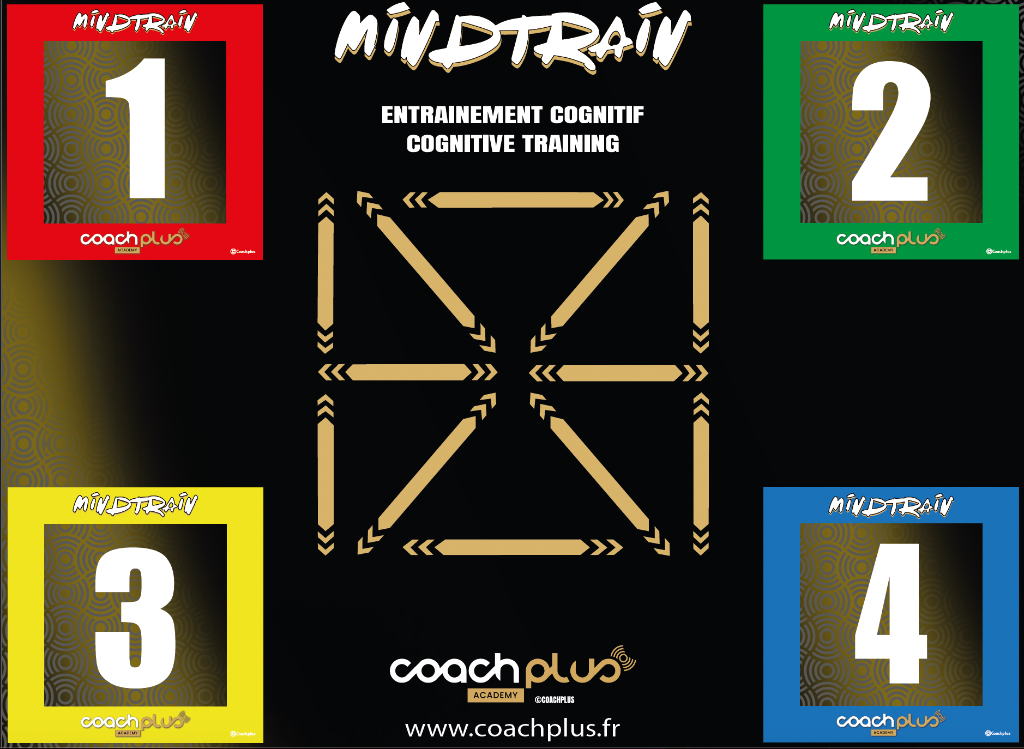
The Mindtrain motor skills mat — exclusive training support for proprioceptive rehabilitation.
Cognitive posters
Mindtrain posters come in 3 difficulty levels for scientific and measurable progression:
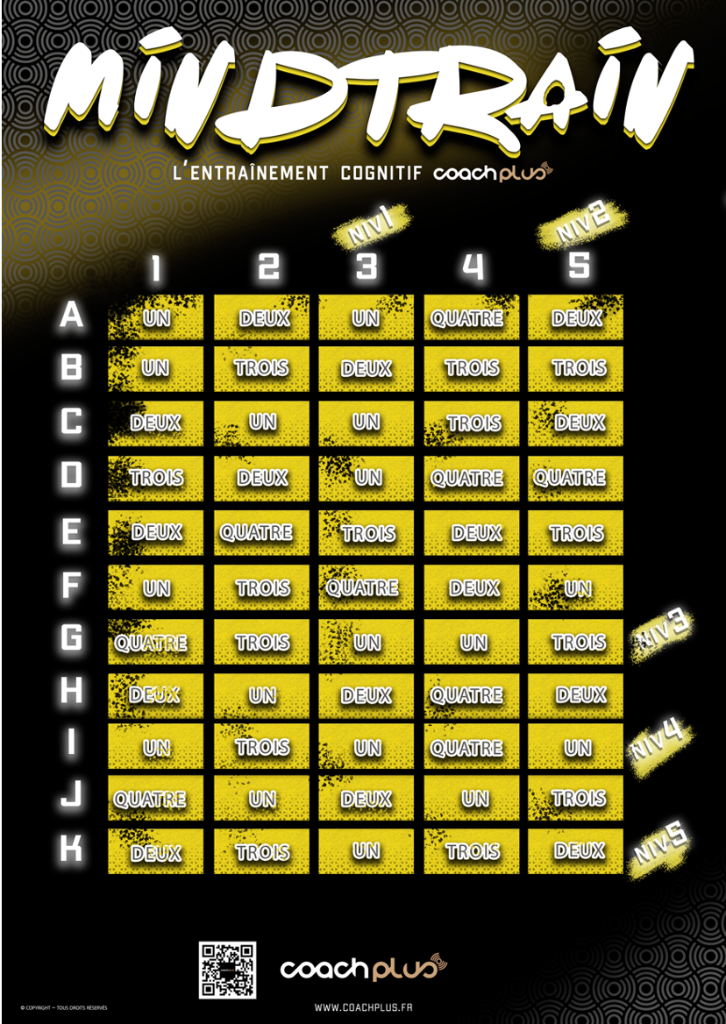
Poster V100 — Initiation: 3 items to memorize, ideal for beginners.
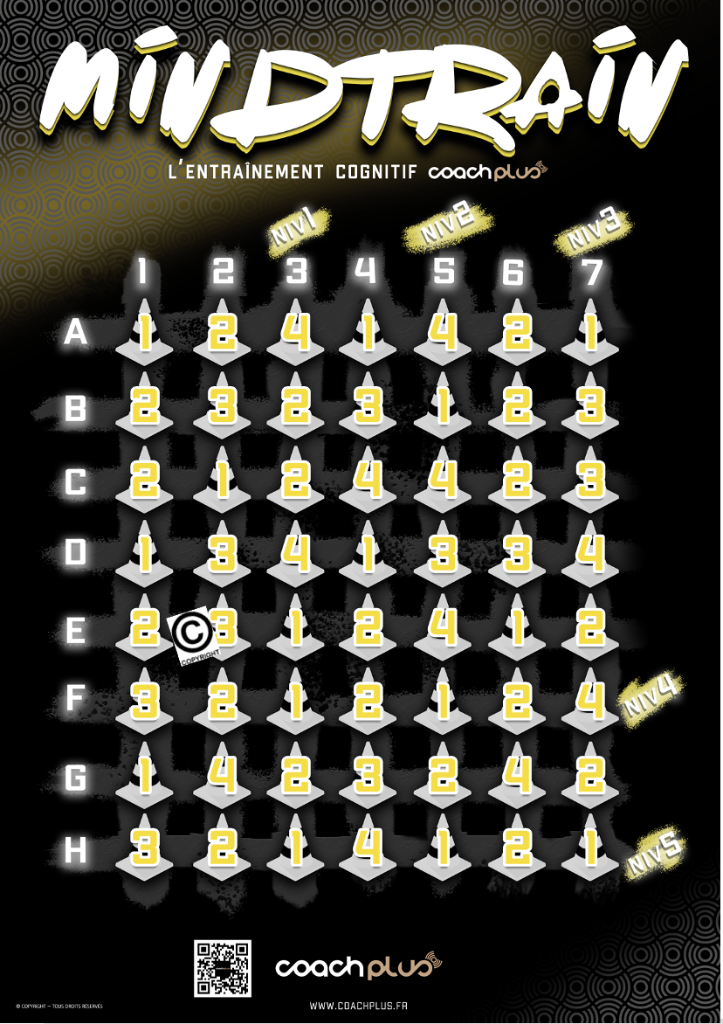
Poster V200 — Intermediate: 4 items, increased cognitive load.
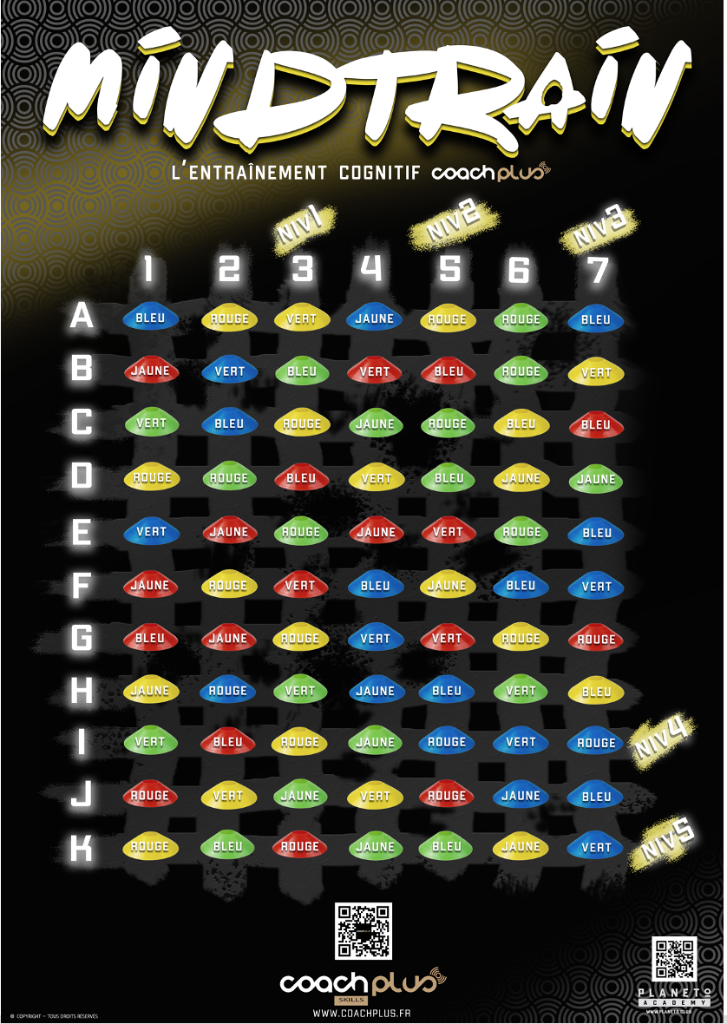
Poster V300 — Expert: 5 items + cognitive disruptors and directional arrows.
The science behind neuromotor rehabilitation
- Proprioception is the first system degraded after immobilization and the longest to restore.
- Cognitive rehabilitation accelerates the return to performance by restoring processing speed.
- Dual task (movement + attention) is a reliable predictor of return-to-sport readiness.
Mindtrain is a training and educational tool. It does not replace the guidance of a healthcare professional for diagnosis, rehabilitation protocol and clinical follow-up.
Frequently asked questions
When to integrate cognitive exercises into rehabilitation?
As soon as the tissue healing phase is validated by the healthcare professional. Cognitive exercises (reactivity, attention) can begin alongside proprioceptive rehabilitation to accelerate return to sport.
Is neuromotor rehabilitation suitable for all sports?
Yes. The protocols are adaptable: reactivity for racket sports, visuomotor coordination for team sports, anticipation for trajectory sports. The principle remains the same: restore the brain-body connection.
Do I need a professional to start?
Yes for diagnosis and rehabilitation protocol. Mindtrain's cognitive and proprioceptive exercises complement professional follow-up but do not replace it. The physiotherapist or sports doctor validates the progression steps.
Scientific references
- Proprioceptive training and injury recurrence prevention after ankle sprainDOI: 10.1001/jama.2019.0000Méta-analyse
- Cognitive-motor dual task training in post-injury rehabilitationDOI: 10.1016/j.jsams.2020.01.001Essai contrôlé
- Return to sport criteria after neuromotor rehabilitationDOI: 10.3390/jfmk5010000Étude observationnelle
Découvrez l'application Mindtrain — entraînement cognitif, neuromoteur et mental.
Découvrir Mindtrain